Above Neil Rock

Foreword from Above Neil Rock by James Ross Kelly

 This book is original in terms of being new stories in part, but with stories and poems, from two other books of mine. So, I must offer this introduction as a descriptive menu of sorts. This work is a collection over time, of my writing beginning in 1973. I started college in 1971 to get out of the U.S. Army three months early. There was no other motive. I had done well in English and Journalism classes in High School—and little else. College was very different, but I gravitated to these arts none-the-less and did well. I was encouraged to graduate and seek an MFA. I didn’t, finding after recovering from injury making ends meet between terms, that life was happening, and it mostly happened outside academia. That decision might not have been well-considered.

I worked as a journalist, editor, grant writer, as well as bartender, tree planter, briefly as a logger, and various trade jobs from cabinetry and floor finishing to factory work. Life happens to us all. Eventually life caught up with me and like High School and College I ended up with a career in writing. I retired as a writer editor in the Federal sector, mostly the U. S. Forest Service where I advanced to a team leader of Environmental Interdisciplinary Teams for Environmental Impact Statements in Alaska.

I had written short stories and poems in college and after. Over time the notion of attempting literature was always there but it was seemingly as a form of cosmic microwave background radiation. Before 2000 I had a few pieces published and a slim chapbook of poems that came out from a literary Handset Letter Press in Vancouver, BC in 1984. So mostly it was jobs in sawdust and sweat, with interludes of running a keyboard putting words on paper. When I had children, seeking a day job with insurance sent me back to use my English skills to make a living but with no thought of the element of literature. That said, of course other people will decide if this is literature or not. I ended my 20 years in Federal Service, (half of which had been in Alaska) and retired. Having settled in Northern California, I pulled all my journals and notes and short stories and poems out of a couple cardboard boxes and began the effort writing and rewriting the contents there. The creative non-fiction essays about the U.S. Army I wrote on a legal pad in San Francisco while visiting a friend with a day job and drinking in an Irish bar in the evenings where the IRA hunger strikers’ portraits were displayed on a special table. This was in 1981, and I had been out of the Army for a decade.

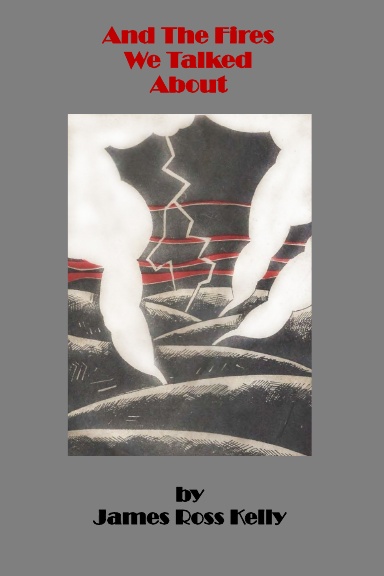
The memoir of my childhood in Kansas and Southern Oregon just gravitated into the cardboard boxes over the years as well. About four decades of my life was in Southern Oregon so that setting is the lion’s share of this book. I wrote some speculative and fictional reality too. None of those stories are in this book though they are in And the Fires We Talked About available on book seller sites.

I brought over a couple of other stories written in the third person in this book, “The Fire Itself,” being one of them that I absolutely could not get down on paper as a first-person account.

“Both Men Were Heavyweights,” I heard over a warming fire on a cold late season deer hunting trip in Southern Oregon and filled in the necessary background. I include these stories with memoir and non-fiction here with no apologies.

While these stories and poems have flown into place with reflection, I have made only a slight attempt to adhere to a linear presentation although some of them are interrelated to one another and are placed contiguously. A good number of the stories here started out as poems. After the third editor that told me they should be stories I began the work to do that—not the easy task I first thought it would be. These are all simply stories and descriptions of profound and poignant intermezzos and relationships in my life that I found I had to put on paper.

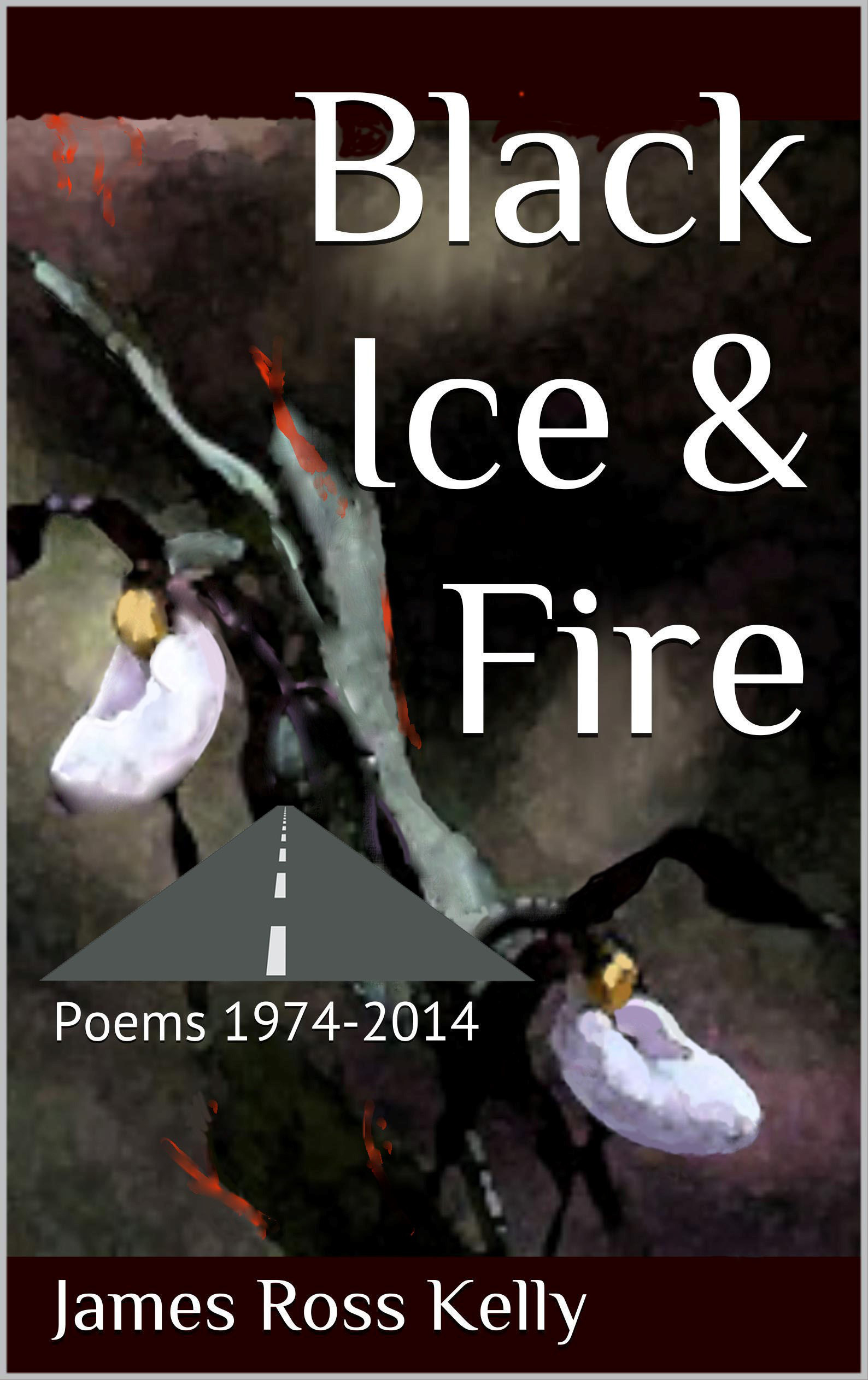
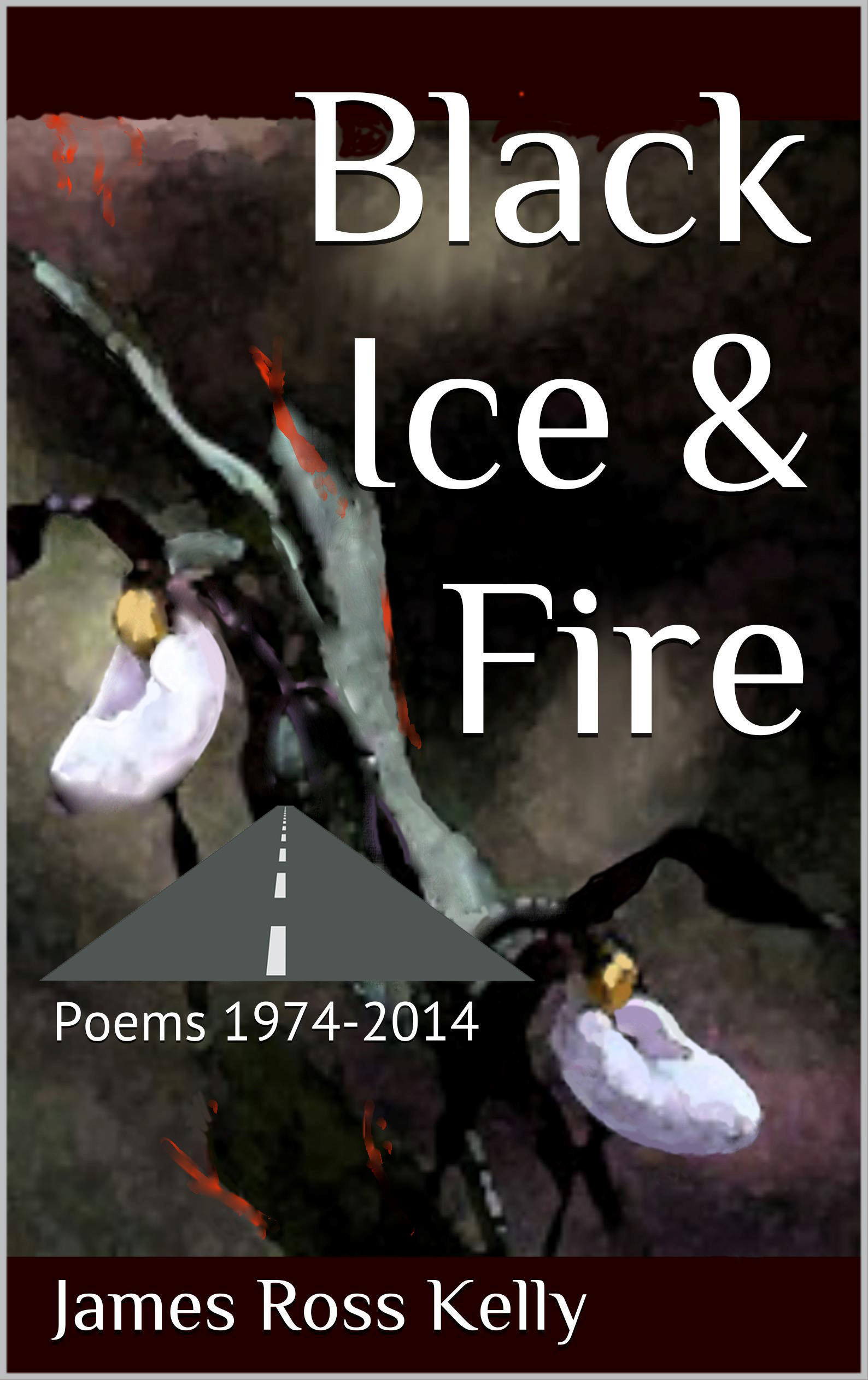
My book of Poems, Black Ice & Fire, which was published in 2021 has poems here as well, because they seemed to want to be in here—for no better reason. And I decided to not corral them in their own fenced in section.

The other reason for this collection is that after the 2020 book of stories I began to get more acceptance in periodicals and Journals.  And perhaps this book is coming out now because it is the collection I wanted out there. I decided to use my own abilities with book design and self-publish this collection. So, I end this missive as a kind of train conductor, and if you have bought a ticket by a purchase of this book and read on from here—it is my hope you enjoy the ride.

______________________________________________________________________

Some of the stories and poems from Above Neil Rock have been published in the following Journals:

“The Other Night at the Log Cabin,” Rogue Valley Weekly War Whoop & Moral Volcano, 1978; “The Forester,” Rogue Valley Weekly War Whoop & Moral Volcano, 1978; “Demoiselle,” The Red Gate & Other Poems Cowan & Tetley 1984 and WILDsound Writing Festival 2025; “The Red Gate,” The Red Gate & Other Poems Cowan & Tetley 1984; ‘Two voices from a campfire long ago,” Poetry Motel 1983; “Death & Poetry,” Poetry Motel 1983;  “Above Lyman’s Riffle,” Fiction Attic 2015; “My Car,” was published inWhen I was Seventeen,” by Silver Birch Press, 2018; “Now Let Me Tell You This Story,” The Purpled Nail 2019 and The Galway Review 2022; “Pacific Yew,” Silver Birch Press 2019; “That’s a Mad Thing to Look At!” True Chili 2020; “How They Kept Geronimo in a Cage,” True Chili, 2019; “Caught Up in the Air,” True Chili, 2020; “We All called Him Pappy,” True Chili, 2021; “Surely Goodness and Mercy,” Blood & Bourbon, 2022; “The Fire Itself,” Still Point Arts Press, 2023, “The Farm,” “The Flood,” “Why the Fairy Shrimp Left,” Lost Lake Folk Opera Magazine, 2023; “Both Men Were Heavyweights,” The Raw Art Review, 2024; and “No Greater Love,” The Purpled Nail 2025  

The book has received several positive reviews:

Two reviews from Publisher’s Weekly: from their Annual Contest “Booklife Prize—2024” for Non-Fiction Memoir here where they kindly post other reviews of this work as well. While I did not win the big prize the book garnered praise “The reader may be reminded of Bret Harte’s work, if Harte had lived in ‘the bloodiest century of human existence’ and experimented with LSD.” They went on with “James Ross Kelly’s masterful storytelling and departure from a traditional memoir model makes the author’s experiences come alive for readers.”

Above Neil Rock also received an “Editor’s Pick” category in this noted periodical when it was published in 2024 where they wrote: “Lyric and moving, both prose and poems are shot through with an unnamable pain, a longing for something intangible. Kelly compares the evil in this world to a minotaur trapped in a maze, often breaking out and causing untold destruction. Kelly’s honest and unsparing gaze doesn’t absolve his own countrymen too, but he sees hope in the philosophy of universal love. A poignant read.”

Above Neil Rock received three Five Star Reviews from Readers Favorite in 2024 that are available on the above-mentioned Publisher’s Weekly Booklife site.  

The cover below is from the Barnes and Noble edition  of Above Neil Rock out in 2025:

Here is a YouTube video of one of the Poems in the book. This one relates the tragic Tsunami caused by massive earthquake in Anchorage, Alaska that hit Crescent City California in 1964. I had a boss who was on the logging crew that went into town to drink beer at a tavern in Crescent City. He had opted for staying in Camp. His mates on hearing a Tidal wave was about to hit Crescent City harbour foolishly decided to buy beers and go to the dock and watch it come in.  Two of the men were never found.
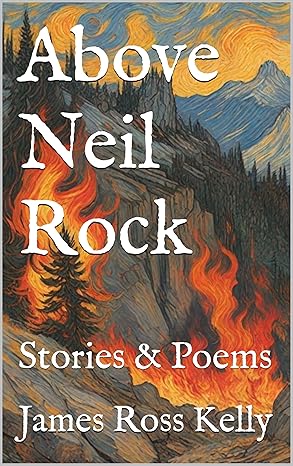
Above Neil Rock

Stories and Poems by James Ross Kelly

Available on Amazon.com

Reviews

Publisher’s Weekly Booklife Reviews.

Kelly’s piercing collection of memoir pieces and poems leaves the reader with a vague ache in the heart. Jim, orphaned after his parents separate, is raised by his uncle and aunt in Southern Oregon, where his grandfather also comes to live with the family. In some ways it is an idyllic childhood, roaming the woods and working the farm, hunting and listening to his grandfather’s tales. But as he tries to live “an honorable life,” Jim also feels an undercurrent of loss as he yearns for his father, mother, and brother. As a veteran who is ultimately discharged with “no medals, no wounds, no horrific nightmare memories, but with a sense of the machine of military mind that operated on fear and redoubled itself with vast sums of money,” Jim contends and tries to come to terms with collective guilt, often doubting if humanity was humane enough.
While the material is often searching, many of the poems and pieces deal with the practicalities of logging. Kelly deftly juxtaposes the often violent lives of the people who make a living cutting down forests with the violence done to the trees, likening the work to nothing short of genocide. Kelly presents an empathetic insider’s account of hardworking, hard-drinking, generally short lives. Characters who linger include Jim’s grandfather who gets his son’s small farm up and running within a year of moving there; Richard Long, a six-foot-seven giant with “dinner-plate-size[d] hands”; and of course the towering conifers—anyone encountering one in the Cascades, he writes, would “approach this presence with awe.”

Lyric and moving, both prose and poems are shot through with an unnamable pain, a longing for something intangible. Kelly compares the evil in this world to a minotaur trapped in a maze, often breaking out and causing untold destruction. Kelly’s honest and unsparing gaze doesn’t absolve his own countrymen too, but he sees hope in the philosophy of universal love. A poignant read.

Takeaway: Profound, genre-crossing memoir of farm life, logging, and war and its costs.

Comparable Titles: Richard Powers, Howard White.

Production grades
Cover: A
Design and typography: A
Illustrations: N/A
Editing: A
Marketing copy: A-

Publisher’s Weekly–BookLife Prize – 2024

Plot/Idea: Above Neil Rock is an expert storyteller’s look back on a life full of ups, downs, and many seemingly-mundane moments that are brought to life through lyrical prose and poetry. The reader may be reminded of Bret Harte’s work, if Harte had lived in “the bloodiest century of human existence” and experimented with LSD.

Prose: The memoir’s writing is exceptionally beautiful, even–or, perhaps, especially–when discussing some of the hardships in the author/narrator’s life. Scenes from his childhood that depict the expansive Kansas prairie and later scenes set in nature shine as well. They depict a bygone time, not necessarily with nostalgia, but with poignant candor.

Originality: Telling a memoir through vignettes and poems that don’t always share direct linear plot threads is a risky narrative move, but it’s one that James Ross Kelly pulls off remarkably well. Above Neal Rock is an engrossing read, both because of the author’s varied life experiences and because of the unique, lyrical voice with which these experiences are recorded. The reader may note some outdated language that may cause readers to bristle. It is also true that the worlds depicted are overwhelmingly masculine spaces. However, there is a level of honesty and self-awareness to the narrator that will endear him to readers.

Character/Execution: Each vignette creates a new stitch of Americana–whether the dusty fields of 1950s Kansas or Haight-Ashbury, San Francisco in 1970–that brings these times and places alive. “La vie en rose” is a timely, heartbreaking piece that brings the memoir into our own precarious time in history. It will resonate with many readers.

Blurb: James Ross Kelly’s masterful storytelling and departure from a traditional memoir model makes the author’s experiences come alive for readers.

Reader’s Favorite

5 Stars–Reviewed by K.C. Finn for Readers’ Favorite

Above Neil Rock: Stories & Poems by James Ross Kelly is a memoir that captures the rugged beauty and harsh realities of life in the Pacific Northwest. Through a blend of stories and poems, Kelly reflects on the environmental devastation caused by corporate silviculture, the extinction of indigenous cultures, and the personal struggles of his upbringing. His writing, deeply rooted in experience, conveys a love for the land and a mournful awareness of its losses. Kelly’s work is both an homage to nature and a critique of the forces that have shaped, and often harmed, the region. Kelly offers a narrative style with an authentic, lived-in quality that brings the Pacific Northwest to life with precise detail, and the striking sense that every moment he chooses to document carries huge emotional weight behind it.

James Ross Kelly’s ability to blend this narrative with broader environmental and cultural issues is immense, and it’s clear that a lot of interconnected thought has gone into the construction of this work to offer a poignant snapshot of the dangers of money-minded silviculture. Kelly’s courage in confronting painful memories and societal injustices lends a raw honesty to this work, and his poetic use of language is powerfully impactful, with memorable phrases that resonate long after reading. I was particularly struck by the imagery of ‘The Forester’ in which the call of the elk and the screaming cables of the logging industry create a horrendous, ill-fitting harmony in the decimated woodland. Overall, Above Neil Rock is a deeply impactful and relatable memoir that I highly recommend to those interested in personal stories, but also those keen to preserve the lands they’ve grown up in and celebrate them.

Reviewed by Doreen Chombu for Readers’ Favorite

5 Stars–Reviewed by Doreen Chombu for Readers’ FavoriteAbove Neil Rock is a collection of stories, poems, and prose by James Ross Kelly. It combines personal and familial stories set against great social commentary. The book covers stories from the author’s childhood, including the warmth of Christmas, learning farming from his grandfather, and fishing and swimming with friends. It also delves into the complexity of family life, such as his father’s PTSD from fighting in WWII, his mother’s struggle with sobriety, and the grief of losing his brother. The author gives an account of his military experiences, detailing the joyful times as a group and the gloomy memories of losing friends. He narrates hilarious stories that shaped his understanding of the world and his experience of planting trees and dealing with loggers. From relationships and fatherhood to guilt and social views, Kelly discloses his most vulnerable moments and deepest thoughts. Above Neil Rock is a captivating book that will take you on a roller coaster of emotions. James Ross Kelly jumps from one event of his life to the next with detailed descriptions that will make you laugh or cry. His reflections are thought-provoking, delving into the beauty of nature, the importance of hard work, morality, responsibility, and the impact of genocides and political unrest. The author is an engaging storyteller and poet, drawing readers into his narrative with a unique blend of humor and drama. The poems complement the narration as they are perfectly placed in the story, enhancing the emotional depth of each chapter. The author tackles issues like environmental protection, the current political climate in the United States, the Holocaust, the foster care system, addiction, and abortion, treating each with the utmost sensitivity and respect. The stories about his family and community perfectly illustrate the interconnectedness of human experiences and highlight the weight of personal and collective history. Overall, I enjoyed reading Above Neil Rock and learned many lessons from the author’s experiences. This book is a great read, and I recommend it to anyone who loves memoirs with poetry and social commentary.

Reviewed by Rabia Tanveer for Readers’ Favorite

5 Stars–Above Neil Rock: Stories & Poems by James Ross Kelly is a memoir in which the author recounts his life and shares the past with poems and short stories. The author takes the reader through his life from 1952 when he worked different jobs. From farming, ranching, and then joining the US Army, the reader experiences everything with him through his prose and poems. Stories like “Why the Fairy Shrimp Left” gave a realistic yet very personal look into the life of the author. “The Red Gate” showed an emotional look at his time on the farm. It was filled with nostalgia and a bittersweet type of pain that I could also feel. Above Neil Rock by James Ross Kelly gives the reader a glimpse into his heart and mind. However, these stories and poems also offer a glimpse into the lives of those who call the Pacific Northwest home and give us a look at working-class families who have struggled to survive during tumultuous times. The author’s writing is infused with a sense of urgency and a deep love for the natural world. While he recounts his past, Kelly isn’t bitter or angry; he is nostalgic and even sad in certain parts. I found comfort in his narrative style; it felt like he was a long-lost friend whom I met again after a long time. I enjoyed the pace that seemed to follow the ups and downs of Kelly’s life. The attention to detail, the way he described his emotions and the way he didn’t shy away from baring his soul had me hooked until the end. I know I will be revisiting Above Neil Rock very soon!

“The Fire Itself” published in Still Point Arts Quarterly

THAT THIRD SUMMER AFTER THE HULL MOUNTAIN FIRE, Leonard Moore picked black-cap raspberries with his youngest son where the upper cabin had been. They made pie that day with their booty, a half dozen pies, with the sweetest of wild tart taste baked in their propane oven late in August with the doors open in their small cabin. If you had been there, you’d have gotten a slice they shared them with friends, and perhaps the pies were a rite of passage. Len had survived two years of divorce and single fatherhood, raising a boy from three years old pretty much by himself.

Published by Still Point Arts Review Summer 2023 here.

From a book of short stories And the Fires We Talked About, James Ross Kelly, UnCollected Press, 2020

“Easter Sunday Afternoon” from And the Fires We Talked About


By James Ross Kelly

HE WAS STOOPED OVER AND ABOUT five-foot-five on a freeway entrance on I-5 northbound, with two good-sized paper grocery bags. Bundled up as he was, you could not discern by a scraggly grey-streaked beard; could have easily been fifty or older, but, stocking-capped, it was hard to tell.

“Oh thanks, oh thanks,” He said.

“I need a seven-mile ride!” He said.

Clear blue sky met us both and the twenty-year-old Ford picked up to freeway speed, and he was settling in with his bags at his feet. There were four, quart bottles of Rainer Ale.

“Warming up eh?” He said.

“Well yes, and its Easter,” I say, and I told him I’d just been to church, told him the Pastor preached the Road to Emmaus, and…

“Luke 24!” He said.

“They were walking with Jesus!” He said.

“Didn’t know it was Him!” He said.

I thought of stumbling over some point this Pastor had made, then I stopped. He knew scripture; I listened.

“Didn’t know, until they broke bread with him, Ha!” He said, slapping his knee.

“Got me a bridge up here I like!” He said, almost growling.

“Stays nice and dry, I can have a little fire, and nobody sees the smoke.”  He said.

“I stopped being able to live inside about fifteen years ago,” He said.

“Don’t know why, I can’t live inside. I do pretty good. I worry in the winter that my feet will freeze.”  He said.

“I do pretty good though, see my way around, find places like this bridge,” He said.

“Haven’t been rolled in two years,” He said.

“I can’t live inside.”  He said.

“Wrap my feet with paper on winter nights.” He said.

“I’m afraid in the winter my feet might freeze,” He repeated.

“My feet froze seven years ago, lost one toe.” He said.

“But it’s getting warm now.”  He said.

“I do pretty good.” He said.

When we arrived at the bridge, I got off onto the freeway shoulder with my Ford, and we talked for a while. My heart burned. I remembered I’d just bought a box of oranges. I got out and retrieved a dozen to a plastic bag from the trunk, I’d just done laundry and there were wool socks on top of the laundry basket, I put those in with the oranges and I found a twenty and gave him that too.

“He is risen!” I said.

“He is risen indeed!” He said, then vanished down under a roadbed bridge home.


And the Fires We Talked About–Copyright © 2020 by James Ross Kelly

Black Ice & Fire 5 Stars from Readers Favorite

From the moment I started reading the poems, I could feel the author’s passion, and the lyrical style resonated with me immediately. One of my favorite things about this collection is that I feel they have the potential to connect with people from different backgrounds and walks of life because Black Ice & Fire covers a vast range of topics and explores a spectrum of ideas that relate closely to common emotions that we all go through.

Reviewed by K.C. Finn for Readers’ Favorite:

https://readersfavorite.com/book-review/black-ice-fire

Reader’s Favorite rates “And the Fires..” 5 Stars!

And The Fires We Talked About by James Ross Kelly is an anthology of 35 stories of varying lengths. The tales are set mainly in and around the town of Medford, Oregon and the California hills, though some stray much further afield to North Africa and the Red Sea. Many contain pithy local dialect or idioms which bring a flavor of the forests and mountains in the area and the men who work at logging and tree planting in the unforgiving landscape. The stories tell of their lives, the back-breaking work, the dangers, and the recreational visits to clubs and bars. There are strippers and fistfights, and beer flows freely in the bars as the men relax and for a time forget the perils of their chosen field of labor. Some stories tell of military men during the Vietnam conflict and there is one particularly moving tale of a forest fire in the California hills. The author displays an extraordinary depth of knowledge about the nature of the forests and the logging operations, while he also bemoans the disappearance of community and a particular bucolic way of life as farms and holdings are snapped up by rapacious, faceless corporations. But there are more diverse tales too – tales that will stretch your imagination, such as Standing in the Rain, where he writes about an author who is experiencing a degree of success writing formulaic detective novels, but is assailed by one of his characters who is unhappy about the way the plot has developed. James Ross Kelly also displays an intricate knowledge of the topless bars and strip joints of the seventies and eighties – knowledge which features in several of the tales and perhaps particularly so in No One Here Gets Out Alive. Well-written and covering a variety of themes and subjects, there is something in this collection for most tastes but maybe should be avoided by your maiden aunt.I enjoyed And The Fires We Talked About; it contains many glimpses into worlds and ways of life that are rapidly disappearing. Written in a forthright, unflinching style, Mr Kelly’s characters live and breathe and rise solidly from the pages. There is a certain amount of sex and violence but I found none of it offensive and felt that it was in keeping with the themes being explored. If I had to pick a favourite story from the collection, I would choose The Fire Itself, a beautifully observed tale of a California forest fire along with a touching look at the natural ecology of the region and one family who lives in it. And The Fires We Talked About is an impressive anthology from the pen of a talented author – I do not hesitate to recommend it.

Charles Remington for Readers’ Favorite

Source: Book review of And the Fires We Talked About – Readers’ Favorite: Book Reviews and Award Contest

Willie Smith Review


Erasmus or one of those guys once said something like: When I have money, I buy books; if there’s any money left over, I buy food. Well, here’s biblio proof, in the shape of James Ross Kelly’s latest and loveliest collection of short stories AND THE FIRES WE TALKED ABOUT (title taken from a beautiful David Whited poem, the relevant passage from which is quoted on X. of the intro pages), that when I have money I buy books; if there’s any money left over, I buy a new sweater. This is some hot reading, kids. Buy a copy: it’ll keep you warm on those dreary chilly fall evenings when there are no ongoing debates to heat you up.

Willie Smith, Poet, Novelist–Pacific Northwest raconteur


From page X. of the intro to And the Fires We Talked About by James Ross Kelly

This book is dedicated to the memory of my good friend, the poet David Lloyd Whited (1950-2015), who, not finding me home left this poem on my Smith-Corona in 1993.


Even the fish stories were out today
And the lies we told were truth one time
Before they cut the hills and butchered out the
Trout pond, all of us good looking clear-eyed boys
All of us searching for the right ax
And wondering if the bait that we had was the bait
Which they were biting on. Times like these
I’m just too busy to get to work
Times like these that the friends and the neighbors
Which we grew up with are telling us the
Summertime, in the wintertime, in the falling rain
Good stories and good kids, each of them good
And the fires we talked about
Are probably still burning up there on
That damn hillside.

Featured

Available NOW!–Black Ice & Fire–Poems by James Ross Kelly

LULU.COM

LULU.COM

Amazon.com

previews:

In March, 1964 the Anchorage Earthquake sent a Tsunami down the Pacific Coast from Alaska to hit Crescent City, California causing major damage and 10 fatalities. Several of the fatalities happened to men sitting in a bar who thought it would be a good idea to get some six packs to go– and watch the Tidal Wave come in down at the Crescent City pier.

Poem for the Beer Drunk Fishermen
Who were Lost at Sea
Off the Crescent City Pier
In the tidal wave of 1964—


fools on a spree
six-packs underarms
waving at deodorized
fumes of unreason
before the surf was up
lost long before they
were found between sausages
hamburgers and the
necessity of a mortgage
to come home to
filleted and floundered
between fishing boats
and the fuel of the barge
flipping end over end on
what was to be
the flotsam and jetsam
of what cannot live
in the terrible sound of
creation and beauty
in cataclysmic mandate
as water arcing over league
upon league roll over roll
fathom upon depth naming
an unforgiving– “You!”
at the beer tipping
realization of the mistake
about the smallness of what
was thought to ought to be

Kelly reads from Black Ice & Fire:

Poem for the Beer Drunk Fishermen

Featured

And the Fires We Talked About–Stories by James Ross Kelly–Buy this Book!

0001

Reader's Favorite five star

“I enjoyed And The Fires We Talked About; it contains many glimpses into worlds and ways of life that are rapidly disappearing. Written in a forthright, unflinching style, Mr. Kelly’s characters live and breathe and rise solidly from the pages. And The Fires We Talked About is an impressive anthology from the pen of a talented author — I do not hesitate to recommend it.” Charles Remington for Readers’ Favorite

Available Now!

From Lulu.com

From Amazon.com

From Barnes and Noble

From Kindle


Kelly’s stories are tough, real, honest, and always true. Unadorned by gimmick or artifice, the pieces in this collection—all framed between the imagined voices of that most primal couple, Adam and Eve—carry us deep into the heart of a wild American world that in many ways (and most definitely for a lot of younger people) sadly no longer exists. The human settings of these stories—bars, strip clubs, dingy apartments, goldmines, ranches, logging crews, homesteads, highways—are rich with details and textures that linger long after the closing sentences. Beyond those, however, there’s always a sense of something even larger and older surrounding the often small, sometimes strange, yet always compelling events his narrators are recounting. Sometimes this larger thing is the natural world—the oceans and forests, the plants and animals—always placing the events into their proper context. At other times, it’s the human interactions themselves that somehow seem to take on this greater, at times even mythic, weight and power. Reading these pieces, we recognize how the hungers and desires, the fears and hopes, the regrets and epiphanies of his people have all somehow entered our cultural DNA, and how—like them–it’s up to each of us to come to terms with all the beauty and terror that comes with being alive.

Dave Sims

After 30+ years of teaching in colleges, universities, military bases, and prisons from Alaska to Louisiana, Dave Sims retired to the mountains of central Pennsylvania where he now dwells and creates. His most recent comix appear in The Nashville Review, Talking Writing, and Freeze Ray, and panels from his digital painting sequence “Somewhere Around the Edges,” appear on the cover and in the Winter 2019 issue of The Raw Art Review.


What Oregon authors say about this book:

“This book is good company. And I appreciate the opportunity to associate with intriguing folks out there where I rarely venture.”

Lawson Fusao Inada, emeritus professor of English at Southern Oregon University, Oregon Poet Laureate, and author of Before the War: Poems as They Happened, and Legends from Camp, which won an American Book Award in 1994.

“The remarkable thing about this collection—how often it touched my heart. These stories have a soul.”

Robert Leo Heilman, author Children of Death, and  Overstory Zero: Real Life in Timber Country (Winner of the Andres Berger Award for Pacific Northwest Nonfiction 1996).


A Man’s Voice–from And the Fires We Talked About

Ted Brr_man woman
                       oil painting by Ted Barr

HE HANDED IT TO ME THEN, I DUNNO, how I did it—knew I shouldn’t, but I just sliced me a slice of fruit with the ol’ barlow knife while I was looking at a coiled up snake, who’d been talking to my woman.
Yes, damnit, I know I should have been suspect of a talking snake. Howsoever, first thing I know, I was making moonshine, skip and go naked foolin’ round til waay after midnight, every-night, everything seemed clear for a while, but trouble was I ended up havin’ to get-a-job, plus plow the farm and then the woman left, and I had to take care of the kids too, and keepin’ the house from fall’n apart.. No more huntn’ and fishin’ just makin’ mortgage payments for a farm I had been given free and clear long ago. Before the bank was even a notion, and it seems like there was a time when there was just plants and animals and clear blue sky, white clouds and the low and high blue flint hills and the woman had really just been a part of me that couldn’t no more leave than I could say anything bad about anything and having kids didn’t involve them growing up and killing each other. Back then I don’t ever remember screaming in the middle of the night either.

Available Now!

From Lulu.com

From Amazon.com

From Barnes and Noble

And the Fires We Talked About–Copyright © 2020 by James Ross Kelly

All rights reserved. No part of this book may be used reproduced in any form by electronic or mechanical means without permission in writing from the author and UnCollected Press except in the case of brief quotations embodied in critical articles and reviews.

James Kelly And The Fires We Talked About Publisher coverjkedit 003


Now These Present Ghosts by James Ross Kelly (MY FRONT DOOR Series)

silverbirchpress's avatarSilver Birch Press

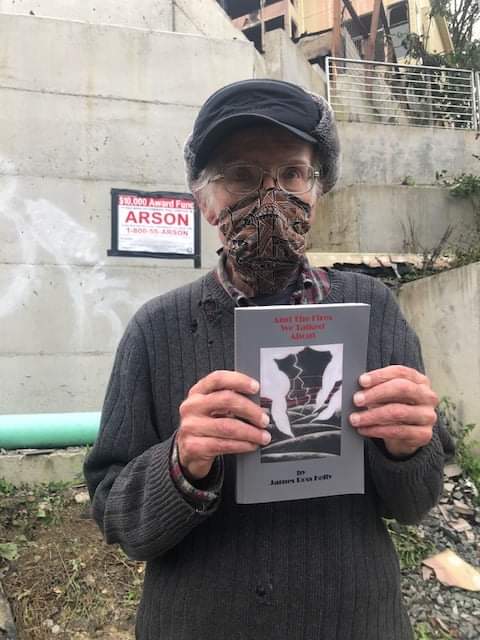
Kelly at door 01Now These Present Ghosts
by James Ross Kelly

If you walked through the front door
with the thumb latch key &
Took a right you’d walk into the living room
& continue on &
With a left turn before the bedroom
There were worn wooden stairs
& upstairs were rooms of equal size
Sparely furnished &
On a hanger in the east room
My father’s uniform hung festooned as
Staff Sergeant, Eisenhower jacket
& campaign ribbons on the front
A hall a door closed on the attic
That ran half the length of the upstairs,
& if you opened the attic
Door a window from the south kept it pretty hot
I would play in the attic when it was cool
I remember finding Indian head pennies under loose
Floorboards, other than books
I can’t remember any of the contents of
The attic, boxes, I suppose, it was not empty…

View original post 399 more words