Above Neil Rock

Foreword from Above Neil Rock by James Ross Kelly

 This book is original in terms of being new stories in part, but with stories and poems, from two other books of mine. So, I must offer this introduction as a descriptive menu of sorts. This work is a collection over time, of my writing beginning in 1973. I started college in 1971 to get out of the U.S. Army three months early. There was no other motive. I had done well in English and Journalism classes in High School—and little else. College was very different, but I gravitated to these arts none-the-less and did well. I was encouraged to graduate and seek an MFA. I didn’t, finding after recovering from injury making ends meet between terms, that life was happening, and it mostly happened outside academia. That decision might not have been well-considered.

I worked as a journalist, editor, grant writer, as well as bartender, tree planter, briefly as a logger, and various trade jobs from cabinetry and floor finishing to factory work. Life happens to us all. Eventually life caught up with me and like High School and College I ended up with a career in writing. I retired as a writer editor in the Federal sector, mostly the U. S. Forest Service where I advanced to a team leader of Environmental Interdisciplinary Teams for Environmental Impact Statements in Alaska.

I had written short stories and poems in college and after. Over time the notion of attempting literature was always there but it was seemingly as a form of cosmic microwave background radiation. Before 2000 I had a few pieces published and a slim chapbook of poems that came out from a literary Handset Letter Press in Vancouver, BC in 1984. So mostly it was jobs in sawdust and sweat, with interludes of running a keyboard putting words on paper. When I had children, seeking a day job with insurance sent me back to use my English skills to make a living but with no thought of the element of literature. That said, of course other people will decide if this is literature or not. I ended my 20 years in Federal Service, (half of which had been in Alaska) and retired. Having settled in Northern California, I pulled all my journals and notes and short stories and poems out of a couple cardboard boxes and began the effort writing and rewriting the contents there. The creative non-fiction essays about the U.S. Army I wrote on a legal pad in San Francisco while visiting a friend with a day job and drinking in an Irish bar in the evenings where the IRA hunger strikers’ portraits were displayed on a special table. This was in 1981, and I had been out of the Army for a decade.

The memoir of my childhood in Kansas and Southern Oregon just gravitated into the cardboard boxes over the years as well. About four decades of my life was in Southern Oregon so that setting is the lion’s share of this book. I wrote some speculative and fictional reality too. None of those stories are in this book though they are in And the Fires We Talked About available on book seller sites.

I brought over a couple of other stories written in the third person in this book, “The Fire Itself,” being one of them that I absolutely could not get down on paper as a first-person account.

“Both Men Were Heavyweights,” I heard over a warming fire on a cold late season deer hunting trip in Southern Oregon and filled in the necessary background. I include these stories with memoir and non-fiction here with no apologies.

While these stories and poems have flown into place with reflection, I have made only a slight attempt to adhere to a linear presentation although some of them are interrelated to one another and are placed contiguously. A good number of the stories here started out as poems. After the third editor that told me they should be stories I began the work to do that—not the easy task I first thought it would be. These are all simply stories and descriptions of profound and poignant intermezzos and relationships in my life that I found I had to put on paper.

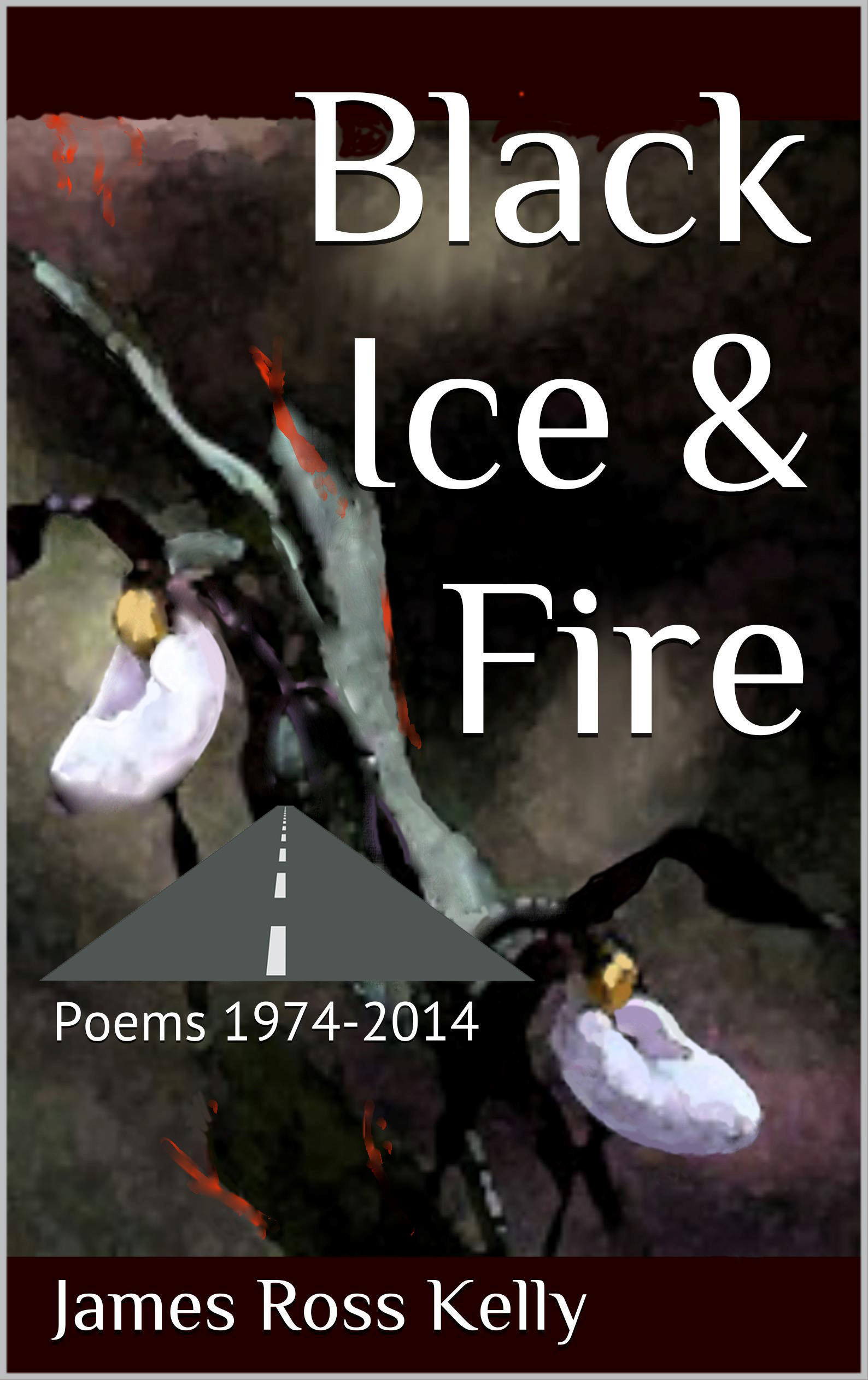
My book of Poems, Black Ice & Fire, which was published in 2021 has poems here as well, because they seemed to want to be in here—for no better reason. And I decided to not corral them in their own fenced in section.

The other reason for this collection is that after the 2020 book of stories I began to get more acceptance in periodicals and Journals.  And perhaps this book is coming out now because it is the collection I wanted out there. I decided to use my own abilities with book design and self-publish this collection. So, I end this missive as a kind of train conductor, and if you have bought a ticket by a purchase of this book and read on from here—it is my hope you enjoy the ride.

______________________________________________________________________

Some of the stories and poems from Above Neil Rock have been published in the following Journals:

“The Other Night at the Log Cabin,” Rogue Valley Weekly War Whoop & Moral Volcano, 1978; “The Forester,” Rogue Valley Weekly War Whoop & Moral Volcano, 1978; “Demoiselle,” The Red Gate & Other Poems Cowan & Tetley 1984 and WILDsound Writing Festival 2025; “The Red Gate,” The Red Gate & Other Poems Cowan & Tetley 1984; ‘Two voices from a campfire long ago,” Poetry Motel 1983; “Death & Poetry,” Poetry Motel 1983;  “Above Lyman’s Riffle,” Fiction Attic 2015; “My Car,” was published inWhen I was Seventeen,” by Silver Birch Press, 2018; “Now Let Me Tell You This Story,” The Purpled Nail 2019 and The Galway Review 2022; “Pacific Yew,” Silver Birch Press 2019; “That’s a Mad Thing to Look At!” True Chili 2020; “How They Kept Geronimo in a Cage,” True Chili, 2019; “Caught Up in the Air,” True Chili, 2020; “We All called Him Pappy,” True Chili, 2021; “Surely Goodness and Mercy,” Blood & Bourbon, 2022; “The Fire Itself,” Still Point Arts Press, 2023, “The Farm,” “The Flood,” “Why the Fairy Shrimp Left,” Lost Lake Folk Opera Magazine, 2023; “Both Men Were Heavyweights,” The Raw Art Review, 2024; and “No Greater Love,” The Purpled Nail 2025  

The book has received several positive reviews:

Two reviews from Publisher’s Weekly: from their Annual Contest “Booklife Prize—2024” for Non-Fiction Memoir here where they kindly post other reviews of this work as well. While I did not win the big prize the book garnered praise “The reader may be reminded of Bret Harte’s work, if Harte had lived in ‘the bloodiest century of human existence’ and experimented with LSD.” They went on with “James Ross Kelly’s masterful storytelling and departure from a traditional memoir model makes the author’s experiences come alive for readers.”

Above Neil Rock also received an “Editor’s Pick” category in this noted periodical when it was published in 2024 where they wrote: “Lyric and moving, both prose and poems are shot through with an unnamable pain, a longing for something intangible. Kelly compares the evil in this world to a minotaur trapped in a maze, often breaking out and causing untold destruction. Kelly’s honest and unsparing gaze doesn’t absolve his own countrymen too, but he sees hope in the philosophy of universal love. A poignant read.”

Above Neil Rock received three Five Star Reviews from Readers Favorite in 2024 that are available on the above-mentioned Publisher’s Weekly Booklife site.  

The cover below is from the Barnes and Noble edition  of Above Neil Rock out in 2025:

Here is a YouTube video of one of the Poems in the book. This one relates the tragic Tsunami caused by massive earthquake in Anchorage, Alaska that hit Crescent City California in 1964. I had a boss who was on the logging crew that went into town to drink beer at a tavern in Crescent City. He had opted for staying in Camp. His mates on hearing a Tidal wave was about to hit Crescent City harbour foolishly decided to buy beers and go to the dock and watch it come in.  Two of the men were never found.
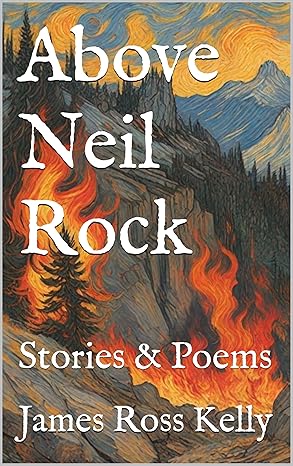
Above Neil Rock

Stories and Poems by James Ross Kelly

Available on Amazon.com

Reviews

Publisher’s Weekly Booklife Reviews.

Kelly’s piercing collection of memoir pieces and poems leaves the reader with a vague ache in the heart. Jim, orphaned after his parents separate, is raised by his uncle and aunt in Southern Oregon, where his grandfather also comes to live with the family. In some ways it is an idyllic childhood, roaming the woods and working the farm, hunting and listening to his grandfather’s tales. But as he tries to live “an honorable life,” Jim also feels an undercurrent of loss as he yearns for his father, mother, and brother. As a veteran who is ultimately discharged with “no medals, no wounds, no horrific nightmare memories, but with a sense of the machine of military mind that operated on fear and redoubled itself with vast sums of money,” Jim contends and tries to come to terms with collective guilt, often doubting if humanity was humane enough.
While the material is often searching, many of the poems and pieces deal with the practicalities of logging. Kelly deftly juxtaposes the often violent lives of the people who make a living cutting down forests with the violence done to the trees, likening the work to nothing short of genocide. Kelly presents an empathetic insider’s account of hardworking, hard-drinking, generally short lives. Characters who linger include Jim’s grandfather who gets his son’s small farm up and running within a year of moving there; Richard Long, a six-foot-seven giant with “dinner-plate-size[d] hands”; and of course the towering conifers—anyone encountering one in the Cascades, he writes, would “approach this presence with awe.”

Lyric and moving, both prose and poems are shot through with an unnamable pain, a longing for something intangible. Kelly compares the evil in this world to a minotaur trapped in a maze, often breaking out and causing untold destruction. Kelly’s honest and unsparing gaze doesn’t absolve his own countrymen too, but he sees hope in the philosophy of universal love. A poignant read.

Takeaway: Profound, genre-crossing memoir of farm life, logging, and war and its costs.

Comparable Titles: Richard Powers, Howard White.

Production grades
Cover: A
Design and typography: A
Illustrations: N/A
Editing: A
Marketing copy: A-

Publisher’s Weekly–BookLife Prize – 2024

Plot/Idea: Above Neil Rock is an expert storyteller’s look back on a life full of ups, downs, and many seemingly-mundane moments that are brought to life through lyrical prose and poetry. The reader may be reminded of Bret Harte’s work, if Harte had lived in “the bloodiest century of human existence” and experimented with LSD.

Prose: The memoir’s writing is exceptionally beautiful, even–or, perhaps, especially–when discussing some of the hardships in the author/narrator’s life. Scenes from his childhood that depict the expansive Kansas prairie and later scenes set in nature shine as well. They depict a bygone time, not necessarily with nostalgia, but with poignant candor.

Originality: Telling a memoir through vignettes and poems that don’t always share direct linear plot threads is a risky narrative move, but it’s one that James Ross Kelly pulls off remarkably well. Above Neal Rock is an engrossing read, both because of the author’s varied life experiences and because of the unique, lyrical voice with which these experiences are recorded. The reader may note some outdated language that may cause readers to bristle. It is also true that the worlds depicted are overwhelmingly masculine spaces. However, there is a level of honesty and self-awareness to the narrator that will endear him to readers.

Character/Execution: Each vignette creates a new stitch of Americana–whether the dusty fields of 1950s Kansas or Haight-Ashbury, San Francisco in 1970–that brings these times and places alive. “La vie en rose” is a timely, heartbreaking piece that brings the memoir into our own precarious time in history. It will resonate with many readers.

Blurb: James Ross Kelly’s masterful storytelling and departure from a traditional memoir model makes the author’s experiences come alive for readers.

Reader’s Favorite

5 Stars–Reviewed by K.C. Finn for Readers’ Favorite

Above Neil Rock: Stories & Poems by James Ross Kelly is a memoir that captures the rugged beauty and harsh realities of life in the Pacific Northwest. Through a blend of stories and poems, Kelly reflects on the environmental devastation caused by corporate silviculture, the extinction of indigenous cultures, and the personal struggles of his upbringing. His writing, deeply rooted in experience, conveys a love for the land and a mournful awareness of its losses. Kelly’s work is both an homage to nature and a critique of the forces that have shaped, and often harmed, the region. Kelly offers a narrative style with an authentic, lived-in quality that brings the Pacific Northwest to life with precise detail, and the striking sense that every moment he chooses to document carries huge emotional weight behind it.

James Ross Kelly’s ability to blend this narrative with broader environmental and cultural issues is immense, and it’s clear that a lot of interconnected thought has gone into the construction of this work to offer a poignant snapshot of the dangers of money-minded silviculture. Kelly’s courage in confronting painful memories and societal injustices lends a raw honesty to this work, and his poetic use of language is powerfully impactful, with memorable phrases that resonate long after reading. I was particularly struck by the imagery of ‘The Forester’ in which the call of the elk and the screaming cables of the logging industry create a horrendous, ill-fitting harmony in the decimated woodland. Overall, Above Neil Rock is a deeply impactful and relatable memoir that I highly recommend to those interested in personal stories, but also those keen to preserve the lands they’ve grown up in and celebrate them.

Reviewed by Doreen Chombu for Readers’ Favorite

5 Stars–Reviewed by Doreen Chombu for Readers’ FavoriteAbove Neil Rock is a collection of stories, poems, and prose by James Ross Kelly. It combines personal and familial stories set against great social commentary. The book covers stories from the author’s childhood, including the warmth of Christmas, learning farming from his grandfather, and fishing and swimming with friends. It also delves into the complexity of family life, such as his father’s PTSD from fighting in WWII, his mother’s struggle with sobriety, and the grief of losing his brother. The author gives an account of his military experiences, detailing the joyful times as a group and the gloomy memories of losing friends. He narrates hilarious stories that shaped his understanding of the world and his experience of planting trees and dealing with loggers. From relationships and fatherhood to guilt and social views, Kelly discloses his most vulnerable moments and deepest thoughts. Above Neil Rock is a captivating book that will take you on a roller coaster of emotions. James Ross Kelly jumps from one event of his life to the next with detailed descriptions that will make you laugh or cry. His reflections are thought-provoking, delving into the beauty of nature, the importance of hard work, morality, responsibility, and the impact of genocides and political unrest. The author is an engaging storyteller and poet, drawing readers into his narrative with a unique blend of humor and drama. The poems complement the narration as they are perfectly placed in the story, enhancing the emotional depth of each chapter. The author tackles issues like environmental protection, the current political climate in the United States, the Holocaust, the foster care system, addiction, and abortion, treating each with the utmost sensitivity and respect. The stories about his family and community perfectly illustrate the interconnectedness of human experiences and highlight the weight of personal and collective history. Overall, I enjoyed reading Above Neil Rock and learned many lessons from the author’s experiences. This book is a great read, and I recommend it to anyone who loves memoirs with poetry and social commentary.

Reviewed by Rabia Tanveer for Readers’ Favorite

5 Stars–Above Neil Rock: Stories & Poems by James Ross Kelly is a memoir in which the author recounts his life and shares the past with poems and short stories. The author takes the reader through his life from 1952 when he worked different jobs. From farming, ranching, and then joining the US Army, the reader experiences everything with him through his prose and poems. Stories like “Why the Fairy Shrimp Left” gave a realistic yet very personal look into the life of the author. “The Red Gate” showed an emotional look at his time on the farm. It was filled with nostalgia and a bittersweet type of pain that I could also feel. Above Neil Rock by James Ross Kelly gives the reader a glimpse into his heart and mind. However, these stories and poems also offer a glimpse into the lives of those who call the Pacific Northwest home and give us a look at working-class families who have struggled to survive during tumultuous times. The author’s writing is infused with a sense of urgency and a deep love for the natural world. While he recounts his past, Kelly isn’t bitter or angry; he is nostalgic and even sad in certain parts. I found comfort in his narrative style; it felt like he was a long-lost friend whom I met again after a long time. I enjoyed the pace that seemed to follow the ups and downs of Kelly’s life. The attention to detail, the way he described his emotions and the way he didn’t shy away from baring his soul had me hooked until the end. I know I will be revisiting Above Neil Rock very soon!

An Unkindness of Ravens

On the death of poet David Lloyd Whited

It has been over four fortnights since my friend
David died, his widow at his deathbed calling
Me & asking me to speak to him
Through the phone, he in a coma
Children and Marian around so, I panicked &
I prayed the only Christian prayer
I could think of, “Lord bring him back
We need him here, his good cheer and we
Need more of him and Lord don’t take him!”
I’ll apologize to no man for my panic

When his wife arrived from her
Work that Friday he first allowed that he’d not gone
To work as he was feeling bad, & minutes later he
Was on the floor, that Friday night
Having collapsed trying to sit up with Marian’s help
On his couch, didn’t feel good that day
& he stiffened up and went to the floor
I was 700 miles down I-5 I could not go
& there was no good outcome surmised by doctors
The Poet’s heart had given way

In Alaska I saw repeatedly every deer season
An Unkindness of Ravens as they are called
When in a feeding frenzied  group to
Herald every afterkill of blacktail deer,
A snow laden clamor of raven and eagle
Blood on white snow unsympathetic
As most obituaries but louder, & yet
I know only the antidote of fond memory

David & I as young men
Drank and read our poems aloud
& reading poems we crawled through bars & bistros
& fished behind the Snake River dams
& off the derelict sand barge on Maurey Island
& caught ling and true Cod & sharks out of the Puget sound
I carried him out of at least three bars & one night
Off the Tramp Harbor pier
This was the man that wrote:
“Sadness Drives a Fast Red Car”

He died Sunday morning after Thanksgiving
I did not go to the funeral, did not know of a wake
Cremated out of the hospital & as there is usually
These days, no acknowledgement of the body as a rite
A memorial in a church in Tacoma was due
Work friends, one brother, grieving Marian & son & daughters
I called her the morning of the funeral
& I asked her to open all the windows
In their little  house on the Puget Sound
At the mouth of Judd Creek
When she left to go to Tacoma.

My good poet friend David is dead

Anger of a Kind–after viewing a year of child massacres in Mexico, Peshawar, and Syria

Anger of a kind
rests in the contours
of our palms,
inexpressible

Anger of a kind
with clenched fist
demands hearing of
why & wherefores
to this satiated life

Anger of a kind
bleeds from open wounds
& wombs, distended
bellies, machine-gunned children
nerve gassed children, & children killed by suicide bombs

Anger of a kind
wretches at the politicos,
foreign & domestic,
whose wart-healing
short-term gain
infects itself & all
that it touches
with promises & putrescence’s

Anger of a kind cries to a limpid
unconsciousness not
to accept anguish, suffering,
murder, ignorance, nor placation
solely because they have always been
or, because they have always been  paid off

Anger of a kind stands
witness for all that come after, sometimes
having used a tempered edge for necessary deadly force
and final will for change, & that swift bitch–change herself

This anger is kind.

High above at this moment

The last two pieces of oak have gone

Into the stove

& it’s too dark & icy to get more,

Inside the stove a chunk to the right

Smolders & pops

To the left about thirty seconds

Ago the other said the same


It is getting cold—a jet

High above at this moment

Is taking someone

Toward a sad occasion

We all suffer


Iris in a water carafe

Is stupidly trying to bloom

In December


On the hot stove I dropped Frankincense

This after noon

& a Holy odor

Pervades this cabin

No priests on this mountain

Wind chimes however

Announce epiphany

Unrecorded


Lovers embrace in

Immaculate numbers

All over the planet

Genetic material furthered

To be exactly what they

Are, themselves, guiltless after Christ,

Either by love or some other reason


Life brings on abundant life &

His own purpose

& like the tides, surges connection

Recedes, then surges again.

Venus Void of course

Stepping out into

The crisp night air under leafless

Oaks, there is a clean

Smell that can only be

Had in certain places,

Venus shimmers off mountain

Horizon, I thought maybe

You were looking at her too


Glimmering off your Bodega Bay

The pliable ivory of your face

& red hair

& connected pervasively,

Venus occluded with moon

Four days ago.


While you know

I don’t buy Astrology

& for you that’s part

Of your faith & that’s all right

For you then

I wonder about now


Three days before this evening

I’m told of twelve people

Are meeting

Three of which believe

That they are from Venus

& have video tape of

Venusian space ship

Landing on earth


Life is preciously beautiful

& we are part & parcel of

Gaseous formation of the adjacent

Planet & I would never want

To break up their meeting, & laughing

Though I am


Knowing that voiding time

All of this is a togethered thing &

While Botticelli’s art

Which we accept unlike

The Venusian space ship

& how he

Put her so delicately

On the half-shell

With your red hair


It is more like

A dream this art as life

Than a reverie

But there in imagination

We loved each other

& shared our last name w/out marriage

no relation & states away

A decade apart our

Birthdays, yet the same?


We astonished each other

You were swooped off

To California, but

In this cabin, this damn

Cold Oregon December,

Your red hair spilled across

My chest, your smell like

Lilac must, your

Touch soft, is soft &

Warm air becomes heavy

Acrid smoke fills the air,

A cabin, or a cave,

Or a peat heated shanty above

A wind-swept cliff & the sheep bells

Clang in the mist?


I saw a reflection in your eyes

Dim light, our bodies move,

& then we were still, & your

Touch again, it should not be

A dream, yet it was

& that’s all we had


My heart surged

Not from desire

But from wonder &

Though we never made love you

Were many times on

My arm & we many times kissed

Deep spit swapping passion

& one night we slept together

This imagination makes what it will

Yet you were always a person

Not to be worshiped

But to be known & we knew each

Other in some kind of morphic

Field that came together & said

Remember?


I don’t buy reincarnation either, but

The neo-paganism you seemed to love, hey

The playful part I get,

Masks &drums & the anthropomorphic

Notion of animals, like coyote, but

The old gods have always been

Flipping dead

Pagan playfulness, still has a black ribbon

Running through it to the diabolic,

As did the inquisition,

Or any religious spirit

In every camp—waiting

For the wrong move away

Presence interior & from

Above simultaneously


The dimness fades

& the light grows

Too, too bright

I close my eyes

Black ice on asphalt & fire

On the moon

We were both void of direction

Toward God


& then I see again your face

Surprised

Then calm, your face changes, again &

Ten out of ten of us die

& you were eventually gone

from Black Ice & Fire: Poems 1974-2014 by James Ross Kelly      

Earned Wisdom

I hadn’t been home long enough to take a shower

& there came a pounding on the door & I knew only too well

Who it was and he was the last person in the world I wanted to see.

I answered the door.

“Ah Heartache my old friend,” I said,

“Come in you, son-of-a-bitch, come on in make yourself at home.

You know your way around, there’s beer in the refrigerator.

“I gotta  grab a shower.”

He didn’t say a word but headed for the Hotpoint refrigerator

Next to the Frigidaire gas stove.

I got in the shower and washed off the grime from the roofing job,

I’d hated for the last month.  One more week and that would be done.

Then hopefully the rains would start; I’d be off with unemployment checks

Until an editing job promised me, turned up in January

& I could get some of my own writing done,

Without worrying about the wolves at the door

Although this guy and his friends were worse than wolves

I got out of the shower and there he was with his feet propped on my coffee table

Watching the six o’clock news. He had  gone through one sixteen ouncer

& was well into his second —I’d been expecting him

But was wishing he’d gone back to California where he belonged

“Looking kind of down in the mouth,” I said.

“Been with that bitch Envy again haven’t you?

What? And her sister Passion as well.

You sick bastard

That’s what I’ve always admired about you.”

I finished drying my hair and zipped open another tall boy.

I just sat there eyeing the tube with as much attention &

Chagrin at the commercials as he gave Tom Brokaw.

I wanted him out of the apartment but felt some strange

Premonition he needed to be there,

Then there came another knocking at the door.

I answered & there stood

Misery in Friday night togs looking like an escapee

from a disco pogrom  years ago.

“Yeah, I might of known it would be you,” I told him as I opened the door.

“Come in it seems I’ve got some company you’re gonna love.  The beers are where they stay cold.”

And it wasn’t three minutes before there I was with both of them on my couch,

Drinking my beer and arguing about the Baseball strike.

Misery was immediately on the side of the owners  & caps,

Allowing as how he’d never made even one percent of average players salary

While old Heartache lashed into the right to collectively bargain

& protection under anti-trust laws & how Misery’s one percent

Was because he’d never worked longer than three months his life

& couldn’t do anything other than complain well.

I bought out three cans of oily sardines and a bag of chips

before they got around to yelling for food.

I’d scarcely gotten the hosting job done when a banging started at the back door.

“Who the hell could this be now?”

I made my way back through the rubble of beer cans

on the back porch  with its idle fishing poles

& the washing machine that never worked

& there he was—his left shoulder facing me

& looking up into the sky bright almost neon

Twilight of October’s bright changing colors solemnly turning gray

“Loneliness, you bastard,” I grumbled.

“At least you brought beer,”  I told him,

I made my way back into the apartment

Loneliness shuffling in behind me.

“Look who’s here boys,” I yelled

As I went for another one my beers before they were all gone.

I knew Loneliness brought the beer the least money can buy.

Every three months with the change the seasons it seemed

He abandoned whatever twelve-step he was in

& ended back on my back porch with the cheap beer

I made my way back into the living room & they all were making

More noise without saying anything, than Howard Cosell ever did,

Arguing about Self-Pity and whether he was going make it back into town.

“That’s all I need,” I said out loud, “is to have that creep show up tonight.”

I then made a mental note not let him in if he did.

When I discovered that there was nowhere to sit, I took the floor

In front of the tube and they’d switched on a two month old golf tournament

Where a baseball game should have been, &

I knew it was going to be a bad night.


Living the Dream

I entered a fast food restaurant,

My brand, where they will serve

Breakfast 24/7 & where I’ve never

Been sick afterwards, &  this knowledge

Is very valuable much like entering

An area in remote Indonesia & figuring out the

Friendly tribes & how to avoid the cannibals,

I & my wife walk up to the counter, an affable Chicano dude

Takes my order, while giving others in the

Kitchen  orders & I ask him how he is doing?

“Living the dream,” he says,

“Living the dream,” he repeats,

“And you sir?” he asks.

“Wonderful!” I reply, “Wonderful!” I repeat.

I’ve been sitting in my back yard

Remembering this and taking in my

Flowering light lavender purple crepe myrtle, with finches eating

Thistle seed from the hanging socks, my wife has tied there,

in this twenty foot tree the finches are hanging

upside down on the sock like yellow monkeys &

Loud red and orange Canna Lilies in the corner of the yard and now bright

New Red Crepe myrtle, is coming in beside the compost box, at breast height

Flowering for the first time deep purple red, I’m making small talk with my wife &

We are on a back deck under an umbrella at 10 am drinking good coffee

& it will be 104 degrees today, but now it is so pleasant &

I’m remembering this breakfast two weeks ago &

Thinking about “living the dream,” this gentleman

Had lots of tattoos, and deep scars on his face

& forearms—clearly some of his dreams had been

Nightmares, & there was a tone of

Sarcasm in his reply, & so much of this life in

Stepping  into retirement has been this ever-rewarding notion that

I am living the dream, while the poems & stories come out &

Scream out sometimes or sometimes softly but I’m finally living the dream

& the small pension and social security are like the Guggenheim

I never applied for, nor even wanted to apply for, & this

Notion of the artists’ life having to have the day job, & wait,

I did both, I waited, did the bidding of others for a decades & a half

& now I get to fish when I want drive this word processor all day

Or fifteen minutes if I want & I’m taking all this in and paying

Attention dutifully to what my wife is saying, & then she leaves & more

Finches come, a beautiful small red & blue grosbeak comes to the

Bird feeder & peeks around the foliage, leaves, comes back leaves again

& comes back and feeds, I notice robins in the grape vines on the white picket

Fence & realize they are eating our grapes that have just ripened, I yell

At them, my wife has come to find out what is going on &

I tell her about the grapes & we both go to inspect, &

Well they have hammered all fifty or sixty bunches of table grapes

That we were waiting to pick tomorrow, my wife is really mad

& I’m out on the other side of the fence laughing at the birds & the picked

Clean clumps that were just yesterday pumping up their white green

Sugary goodness & are now skeletons beneath the yellowing leaves

I am living the dream; &  I’ve got scars to prove it, like the sweet gone grapes

It is very good this given life & its mortal expanse &

Last year the neighbors picked the grapes while we were on holiday.


In the Spring When Kings Go out to Battle

Battle is all I know

& I count myself dead

Beginning with each war

There is no other way

There is no wife &

There is no life &

I must end life that comes forward to me.

War is not a backward motion


I never knew

That I knew

But I knew perfectly

When my company of men pulled away..


I was always ready to die for this King

For I am one of his 40 mighty men!

& I, a foreigner, a Hittite, as is my wife

Our grandparent’s grandparents settled in with

These Hebrews who treated us well, & many of us

Like myself & my wife became proselytes

Their faith now mine, is now mine own battle dress


Today is no different—except today I know

Just as these dogs are before me— I will die..


But not before this one who charges out of the

Throng, & oh  how I love spilling his blood, & cleaving

Half through his neck & chest— he never saw it..

Now they see me ready again,

“Who is next of you— dogs? Who of your slime is next?


He brought me out of battle! Battle!

This is shame! To leave battle,

I know of no other guilt I could be guilty of

& not ask for forgiveness from this their mighty God

Because it is so vile and shameful! To leave battle?

I, Uriah the Hittite shirked no battle afraid of no foe?

To leave battle? Sent from battle like some load bearer,

Smelled fine food and his perfume in his palace

But not my brothers sweat!

What could be the reason?—this King is my life?

When each war ends, but not until it ends

Until then My life— is always Battle!

War  when it begins is a linear  series of horrific acts

Each death an immoral, yet honorable action until war ends.

This one is not over; we could lose, the battle King

Could lose, simply because he is not here

That men would rally to his standard as the standard of the Almighty

My queen death by my right and left

Hand is the end purpose of my blood!

I sacrifice a lamb for every man I kill.


He set me before table of feast & wine

Then bade me go to my wife? To my wife?

When it is my oath to kill the dogs set before me

& there they remain and my brothers without me at their side?

That is all I could fathom.. I slept at his door & never saw my wife.


Heh, you, you Ammonite scum, die as you run to me! I know your slime

Ridden brothers will soon bring your archers to bear

Until then, this is two of your Hundreds

That taunt, dead & the blood still spilling out of that one now,

His tunic floating red now..

“I want more of you, like a hungry man wants his dinner!”


Three are running toward me now, one to the right, he will

Make a flanking move, the others come straight forward with

Lances, I will kill them all with these moves the Most High

Has given me, we 40 men were schooled in the difference between

Killing and murder—I am a killer. It is so. Yet I have never murdered.

But he the King? Why does he murder me? I thought Joab could never do this

Had it not been bidden by the King

I carried the message that ordered this treachery—I saw it on Joab’s face

My brothers would never do this,  Joab placed me with

Young men, first time in battle & when they withdrew on orders

As I led the charge and these dogs quartered in and have

Boxed  me on this rocky field I saw them Leave in tight formation

—the King was angered

When I refused to go to my wife


Perhaps he slept with my wife & brought me

Home to assuage this guilt? Yet I cannot believe that.

Did he not know that the most shame I could bare

Fiends take my wife who bathed on the roof below the Kings’ window

I joked about the King seeing her private parts!

Perhaps that was my sin, perhaps she will foal Hebrew blood and connect

To a lineage unknown to me, there is more than war, I know now that

This is the day I die, I would want nothing but warriors for sons,

Still.. was leaving my brothers in arms for his table a thing he thought I could bear?

Ah, but those days he commanded us in the field!

I would follow him anywhere and do his bidding

No matter the course, so I left battle hoping to be

Assigned a particularly dangerous duty..


Oh! How, I love to side-step a shield & with a feinting move

This flanking bastard coming close will soon die & while these two get to see me jump!

Up so my sword can kill from the height of his shoulder

I plunge it straight down with the quick stab which parallels down the neck

Passing through clavicle quickly & down quickly down..

Down into the vitals & as I come back to earth tipping the living falling corpse back he falls

The air leaves him & my sword is out and now & as he topples—I kill the other two!

The look on his face when I left the ground is still in my mind

As I now smell them all bleeding—& it is strange that now I wish the King was watching.


“I, Uriah the Hittite Servant of King David—of his 40 mighty men will go to my

Death with joy this day—as a warrior I’ve never looked for rescue!”

My brothers backed off leaving me cut off & the wall over there..

I’ve known since I was dispatched from the King

Some one thing was wrong, & if it be betrayal—so be it.

That I’ve fought valiantly for this King no one will ever deny

This has been my great joy when it was I knew he

Voiced daily with Almighty, I’d seen him as a youth

When he’d put down that ungodly beast behemoth Goliath

Stinking philistine that he was—I admit it I could not fathom it

Yet I saw it, I saw it at 18 and he was 15, & he killed him

With stone from his sling, dead, in the dirt

The giant that smelled of excrement & ate raw meat

& entrails unclean & putrid & gargantuan as he was—he bloated in half a day

David cut off his head with the Giant’s own sword!

Oh how we rejoiced seeing the Philistine dogs run after this &

When I heard that the prophet named David the anointed of

The Almighty I knew of no other thing I could do

But serve him— David, and shortly swore my allegiance

To him and only him, that my old uncle

Betrayed him, & his traitor son who infuriated me, & when I

Saw Absalom dead my heart swelled with the joy

The justice of it, yet I saw my King weep & grieve

As if he’d lost an infant child, I thought him

Beyond human with tenderness that day

I, Uriah the fierce Hittite was moved by

His loss and his ability to love

Now I see that they are

Sending five at me… Ha! I give it to these dogs they

Have not brought archers nor javelins to bear even now & will

Try showing themselves men! Ha! I’ll kill these five!


I’m now leaking red blood & that was a little harder

Than I thought—my age? I’ll have no gray hair after this day!

Ha! This Day of my death, no old man tottering before a grave for me!

I am a warrior & death has always been my mistress.

That keeps me true to my wife!

I’ve always been true but now there are

Other arms of Sheol reaching to receive me —I go there with honor!

If there is resurrection as some of these Hebrews believe,

I desire to march straight for it.

But not before I taunt them more, “Dogs! come spill some more of your

Entrails that I Uriah will make you whore mothers weep! Dogs that

Defy the Mighty one of Israel! Come die with me today so you

Will see Sheol and bark for even dark mercy!”

These Hebrews taught me Job & He Who is Mighty

Test men—I’ll be true to this test

Ha! & now I see the archers being placed, & a phalanx of

Infantry to take my arrowed corpse, Ha! Today I die!

The morning sky is red, & a hot wind blows in my face,

My doom is this day will not steal my joy of this

My final battle—a wrong done against me never-the-less

Through a cause of which I’ll never know here.. yet I smell Hyssop

I smell olive oil,  I smell savory, and Basil, and Aloe

Their clang of armor sounds paltry,

Now I’m hearing distant symbols, tambourines & trumpets

Bah!  I throw down my shield & pick up a lance!

In thirty feet the archers will have to shoot round their infantry

I will charge them!

He has some reason not privy to me, & so as said Job

& now I charge them! & I’m yelling:

“Even though He slay me, yet I will praise Him!”

Starting just before 1970


The double standard was part
Of the unwritten rule
At the start of the decade of the seventies
rules were being bent,
made up, broken, thrown away
& generally laughed at.
wouldn’t be until the mid-1980s
that the pandemic
of acquired immune deficiency syndrome
would bring us scurrying through the gutters
to find the rules and again adopt a modicum
of fidelity that had been temporarily
on hold while penicillin really had knocked
sexually transmitted disease easier to cure
than the common cold, oh these were the brave years
of a sexual revolution that was no more
revolutionary than tomato juice
Personal behavior as a consequence
was on hold with Roe v. Wade mixed up
privacy with infanticide, or reinstalled it
as a pagan rite, while My Lai could be rationalized & its
perpetrators could be slid into obscure exoneration
in the day it was Pendleton shirts, and Converse tennis shoes,
V-8 engines that took you down the American highway
At a high rate of speed, the lonesome highways
between suburbs and rural America where you
could feel a rhythm of road noise
& drive in a day a distance
your grandfather could not travel in three weeks
& then there was the warm wet your pants
seduction of the commercial
National rant of it, that sold the notion
to the nation that this perfect thing
we thought we had, was never perfect, which it wasn’t.
but the sales pitch was—that there was a sale
on Democracy worldwide & that, somehow made it right
that we had the right to make that illusion
part of everywhere else.

Believing

Our love
Our love is all of God’s money
Everyone is a burning sun

-Jeff Tweedy

Belief is the locked up tangible thing,
of law that the dust can be blown off of,
taken from a bookshelf, objectified, crucified
pointed at, solid repository of ideological contusions,
Gnostic misdemeanors, white lies & black ones of unreality
no different from the adulterous
first degree murder of guilty abrasions on your soul & woeful
finger-pointing wrong in legalistic right…

“Liberals and fundamentalists are both humanists,” said the old preacher grinning as he cleaned the carburetor of his Buick with Joy from a yellow plastic bottle & a tooth brush

“One believes there is a better day a coming, all with a strong right arm of correct politics, & culture change.

“The other believes there is a better day a coming, if you do everything the Bible say; both have made Man’s action the operative & left out God as the agent of change. ” Then after putting the air cleaner back together, he laughed and said, “Isn’t it interesting that moralism gets us only so far!”

Rolling up through time & space containerized in

This bone-bag existence of drunken pleasure & pain
& psychedelic sin
& death…

Thankfully,
Believing is..
alive
the BE Living,
the BE loving
Believing is..
Holy Spirit..
Who is…
fluid active running down the river & the red fish
in the river & the same thing and is this River of Life flowing from us..
living water of life on this planet flowing from us somehow..
that gets us to the other side
& brings us back
A-gain,
A resurrection
A dilation of time, in this space–from another one.
so the bone bag has some kin
w/ the reddening sky,
mist on the mountain
bird song, moon rising
star twinkle ’round Orion’s belt
& sun setting over placid ocean
& laughter of a four year old son,
keeper of His kingdom
the Life is..
the forgiving cry of the first born Son
Who is…
the Truth, blessed Yeshua
the Way, to get though this life w/joy,
perseverance, love &
everlasting knowledge..
“Our Father in heaven..”
Who is…
& because His name is..
so Hallowed
this is…
within us &
all so, “On earth as it is in Heaven.”

I planted in the Trinity alps

Someday I’ll go to
the second growth forest
I planted in the Trinity alps
on SP land on a ridge, where
every day at 4 p.m. for three days
Navy jets roared over us
at treetop level shaking the
ground and our hippy asses, while
resting & drinking tall boys
after 7 hours of
bone breaking work, placing tiny
spruce in ripped soil w/ tiny roots
all landing in moisture &
packed down to spring out
next spring and grow back
to giant towers just before
the bare grassy alpine, if
& only if they are forgotten